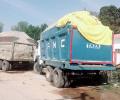
The Morena administration in Madhya Pradesh has banned sand mining and transportation from the Chambal River, along with restricting fuel sales to unregistered vehicles, following criticism from the Supreme Court regarding illegal mining activities.

The Supreme Court has urged the Rajasthan High Court to decide by December 7 on pleas concerning women's reservation in the Rajasthan Cricket Association (RCA). This follows an earlier directive where the SC allowed RCA elections but barred the declaration of results due to a petition highlighting the absence of female voters or candidates. The High Court had previously appointed an administrator for the RCA in July.

Gurugram police have arrested three individuals, including two female domestic helpers and their male accomplice, in connection with the alleged sexual assault of a 3-year-old girl. The arrests follow a Supreme Court decision to hear a plea for a CBI or SIT investigation into the case.

The Supreme Court has mandated that banks must be held accountable for losses incurred by digital fraud victims, ensuring compensation of at least the amount lost if the fraud stems from the financial institution's lack of due diligence. The court emphasised that the proposed RBI regulatory framework must include enforceable provisions for compensation, preventive measures, and institutional accountability, moving beyond mere advisories. The CJI stressed the need for banks to use technology like AI to prevent fraud by monitoring unusual transactions and called for stronger accountability clauses against non-compliant banks.

The Supreme Court has directed the Jammu and Kashmir administration to issue a no-objection certificate and relieving order to international water sports coach Bilquis Mir, enabling her to join the Indian National Kayaking and Canoeing Team as chief coach for the Asian Games. This ruling came after PDP chief Mehbooba Mufti criticised the bureaucratic hurdles faced by Mir, highlighting systemic issues within the administration.

The Supreme Court has questioned the Centre's decision to cap trade margins on anti-cancer drugs at 30 per cent, asking why similar restrictions could not be extended to other medicines and medical consumables, citing glaring disparities between procurement costs and maximum retail prices (MRPs).
The Supreme Court, using its extraordinary powers under Article 142, has quashed the conviction of a man sentenced under the POCSO Act. This decision came after the victim, who was a minor at the time of the offence, married the accused upon reaching adulthood. The court emphasised that this ruling is based on the peculiar facts of the case and should not be considered a precedent.

Two law students, Prabal Pratap Singh and Chander Bhan, were arrested for allegedly disrupting Supreme Court proceedings. The incident involved hurling abuses, assaulting security staff, and creating a commotion during a Special Leave Petition hearing. Police recovered objectionable pamphlets, and both students were remanded to custody as the investigation continues.
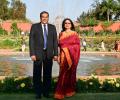
The Supreme Court has appointed former Chief Justice of India Sanjiv Khanna as the sole mediator to resolve a dispute involving businessman Ashokbhai Haribhai Gajera and others in a case linked to textile market projects in Surat. The case involves allegations of siphoning off Rs 1,900 crore and forging documents.

The Supreme Court has taken suo motu action in the case of a brutal assault on a woman advocate in Delhi, allegedly by her husband, and has directed the Delhi Police Commissioner to hand over the investigation to a senior police officer.

The Supreme Court has stayed the Chhattisgarh High Court verdict that sentenced Amit Jogi to life imprisonment in the 2003 murder of NCP leader Ramavatar Jaggi.
The Supreme Court has stayed the Chhattisgarh High Court's verdict sentencing Amit Jogi, son of former chief minister Ajit Jogi, to life imprisonment in the 2003 murder case of NCP leader Ramavatar Jaggi.
The Supreme Court has asked the media to exercise restraint while reporting developments in the death of former model-turned-actor Twisha Sharma, observing that it was pained by the handling of the case.

The Supreme Court has strongly criticised the West Bengal government's handling of an incident in Malda district where judicial officers were allegedly attacked. The BJP has accused the TMC of orchestrating the event to obstruct the Special Intensive Revision (SIR) of electoral rolls and protect Rohingyas.
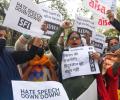
The Supreme Court of India has stated that the current legal framework is sufficient to address hate speech, declining to intervene and create new offences.
The Supreme Court has directed Delhi Police to expedite its investigation into the assault of a woman advocate, allegedly by her husband, while ensuring the safety of the victim and her children.

The Supreme Court has directed a Bengaluru court to expedite the hearing in the Renukaswamy murder case involving actor Darshan and others, expressing concern over the slow progress of the trial.
The Supreme Court has directed the Delhi Police to investigate the brutal assault on a woman advocate, allegedly by her husband, and has asked for a senior officer to lead the probe. The court also addressed concerns about hospitals refusing the victim admission and directed financial assistance.

The Supreme Court of India has expressed concern over media reporting in the death case of former model-turned-actor Twisha Sharma, urging restraint to ensure a fair and impartial investigation.

The Supreme Court has expressed shock and concern over the increasing number of digital arrest scams, questioning why educated individuals continue to fall victim despite public awareness. The court highlighted a case where a woman lost Rs 2.5 crore and suggested that banks should act as a protective umbrella for customers. It is considering directing banks to compensate victims and face prosecution if fraud occurs due to their negligence, noting that digital arrests have already reduced by 50 per cent after its intervention.

The Supreme Court has ruled that banks must compensate victims of digital fraud, especially in cases like "digital arrests," if the fraud results from the financial institution's failure in due diligence. The court is examining RBI's proposed KYC amendments and stressed the need for a regulatory framework that includes victim compensation and preventive measures. It also highlighted the issue of mule accounts and the need for banks to alert police about suspicious transactions.

The Supreme Court has agreed to hear a plea seeking the removal of social media videos featuring Italian politician Giacomo Filibeck. Filibeck is accused of interfering in India's domestic political affairs by allegedly raising the slogan "Vote Chor, Gaddi Chhod" and criticising the government while praising the opposition at the Bharat Summit in Hyderabad.

The Supreme Court strongly criticised a Bihar judicial officer, Anil Kumar, for convicting a Superintendent of Police (SP) for disobeying directions to register an FIR. The apex court called his understanding of law "appalling" and his conduct "Baahubali-like," questioning his jurisdiction and suggesting he be sent for training. The court also stayed his order.

The Supreme Court of India has expressed concern over the continued prevalence of domestic abuse and crimes against women, highlighting that these issues are symptomatic of a deeper societal problem rooted in patriarchy, despite economic and legal advancements.

Former Supreme Court judge Justice Rohinton Fali Nariman has voiced serious concerns regarding the Election Commission's functioning, stating that the right to vote is 'at great peril'. He called for the Supreme Court's intervention to address 'disturbing developments' within the poll panel, particularly citing issues like voter disenfranchisement during electoral roll revisions and the controversial appointment process of Election Commissioners.

The Supreme Court has permitted the Unnao rape survivor to become a party in the CBI's petition challenging the suspension of Kuldeep Singh Sengar's life imprisonment, affirming the victim's right to be heard in the proceedings.

The Supreme Court has appointed former Delhi High Court judge Justice Najmi Waziri as a mediator to resolve the cheque-dishonour dispute involving actor Rajpal Yadav. The legal battle originated from a 2010 financial agreement for his directorial debut, 'Ata Pata Laapata', where Yadav allegedly issued dishonoured cheques. The actor has deposited Rs 2 crore with the SC registry, and the court has allowed his passport release for professional commitments.

The Supreme Court has directed the Indian Coast Guard (ICG) to consider granting permanent commission to Short Service Appointee (SSA) officer Priyanka Tyagi and other similarly placed women, pending vigilance clearance. This follows earlier strong remarks from the court against the ICG's "vague" and "arbitrary" policy regarding women officers, emphasising gender equality in the armed forces.

The Supreme Court has mandated urgent action from Delhi and three neighbouring states (Uttar Pradesh, Rajasthan, Haryana) to tackle the sharp increase in vehicular emissions contributing to air pollution in the National Capital Region. The court has sought detailed responses on measures to prevent over-age vehicles, enforce emission standards, and improve inter-state coordination, highlighting the critical need for intervention despite a decline in stubble burning.
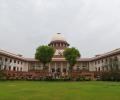
The judges questioned the government's position on arbitration, underscoring the contradiction between its resistance to enforcement and its efforts to promote India as an arbitration-friendly jurisdiction.
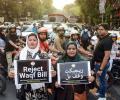
The Congress party announced its intention to challenge the constitutionality of the recently passed Wakf (Amendment) Bill, 2024 in the Supreme Court. AICC general secretary Jairam Ramesh stated that the party will "very soon" file a petition, citing concerns about the bill's impact on constitutional principles. Ramesh highlighted the Congress's ongoing legal challenges against other legislation, including the Citizenship Amendment Act (CAA), amendments to the Right to Information (RTI) Act, and changes to the Conduct of Election Rules. He emphasized the party's commitment to defending the Constitution's principles, provisions, and practices.

The Supreme Court has directed the Delhi High Court to reconsider a plea by 11 members of the Delhi Gymkhana Club challenging the Centre's decision to take over 27.3 acres of land leased to the club and subsequent eviction proceedings. The members argue that the government-nominated management cannot effectively challenge the Centre's actions, which they deem a "colourable exercise" of power and a violation of fundamental rights.

The Delhi High Court has ruled that criminal cases involving sexual offences against children, particularly under the POCSO Act, cannot be settled by the survivor or their family. Justice Sachin Datta emphasised that such heinous offences have a serious societal impact and quashing proceedings based on a compromise would undermine the statute's objectives and justice.

The Supreme Court of India has directed WhatsApp and other intermediaries to propose measures against digital arrest scams and cybercrimes. Simultaneously, the court emphasized that financial institutions, including banks, must be held accountable and compensate victims for losses due to their failure in exercising due diligence. The RBI has been asked to submit a list of authorized financial institutions, and law enforcement agencies are to report on FIRs and suggest prevention strategies.
The Election Commission has informed the Supreme Court that over 37 lakh appeals concerning deletions or inclusions in West Bengal's electoral rolls remain pending under the Special Intensive Revision. The apex court-appointed tribunals have disposed of only a fraction of the 38.20 lakh appeals filed, prompting the Supreme Court to seek data and a plan for streamlining the adjudication process.

The Supreme Court of India has sought proposals for establishing a permanent financial corpus to support patients suffering from Spinal Muscular Atrophy (SMA), a rare genetic disorder requiring expensive treatment. This initiative follows an earlier case involving comedian Samay Raina, which led the court to examine broader systemic concerns for SMA patients.

Comedian Pranit More has approached the Supreme Court to club multiple FIRs filed against him after a guest on his show made a controversial "Rs 370 biryani" remark, deemed misogynistic. More's counsel informed the court that he has apologised on all forums, including the National Commission for Women, and the apex court has sought notices from the Centre and state governments.
The Supreme Court expressed serious concern over the Enforcement Directorate summoning advocates for offering legal advice or representing clients during investigations, calling for guidelines on the matter.

Pakistan's Supreme Court has ordered the transfer of incarcerated former Prime Minister Imran Khan to a private hospital for a medical examination concerning an eye ailment. This directive comes despite jail authorities claiming his eyesight was "almost normal," following petitions from his legal team expressing dissatisfaction with government hospital treatment.

Chief Justice of India Surya Kant has stated that the ongoing protests against Chief Election Commissioner Gyanesh Kumar and the associated restrictions in Delhi fall under law and order, not his judicial purview, and declined to meet opposition leaders regarding the issue.
